Artificial intelligence (AI) is a word you might hear thrown around often these days.
Technologists will talk about how much it’s going to alter life as we know it. Movies will show us future dystopias where robots take over the world.
But AI is more likely to affect you in more ordinary ways first. In fact, the technology has already probably made it into your everyday work routine.
Sure, we have seen plenty of today’s gadgets and different software boast some kind of AI-supported feature. But for the most part, ordinary people are still trying to figure out just what AI is.
AI is an extremely broad concept. Many AI experts still can’t say for certain where it is headed.
That is part of what makes it so exciting. It’s completely untouched territory. You will find, the more you learn, how it’s already transforming your life whether you notice it or not. There is no limit to what artificial intelligence can do.
It is present in places you probably didn’t expect. That includes the workplace. Businesses are already using AI to improve ROI and efficiency in different areas.
Today, we’re going to give you an idea of what AI is. Then we’re going to show you how companies are taking advantage of it to transform the workplace.
The cloud also has played a key role in enabling many companies to operate on a work-from-home basis during the pandemic.
Here are a few ways the cloud is changing your workplace. Some of these are already happening. Some of these could happen before you know it.
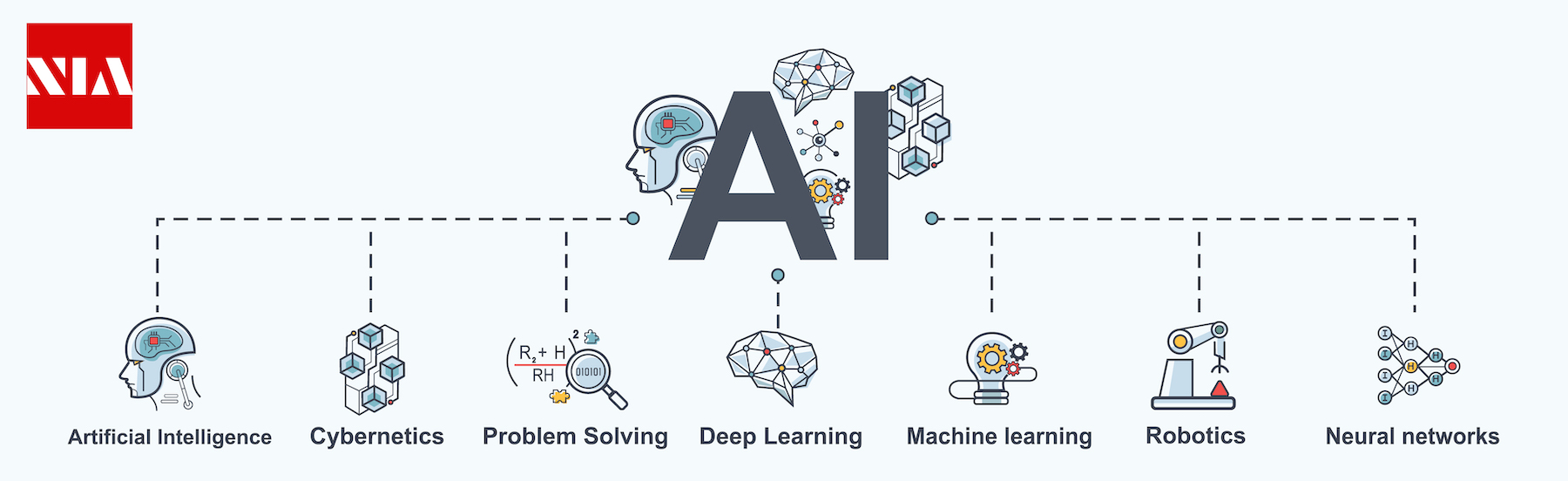
What Is Artificial Intelligence?
Artificial intelligence is basically teaching machines to think like people. It’s intelligence, but artificial. Of course, that is an extremely simplistic explanation of the phenomenon.
This branch of computer science seeks to make machines do things that would require human intelligence. It started in 1950 with Alan Turing, who first posed the question, “Can machines think?”
The Turing test, originally called the “imitation game” was a test of the machine’s ability to respond like a human in conversation.
This thought branched out into an entirely new area of study comparing the human brain to machines, looking at it through the lens of inputs, outputs and processing power.
Fast-forward several decades, and you have various models of “thinking” machines in almost every field of business.
In healthcare, AI deep-learning algorithms are used to process large amounts of information from different databases to give faster, more accurate diagnoses.
Tesla vehicles use artificial intelligence and machine learning to continuously adapt and evolve the car’s software. For example, if the car is autonomous, it can improve navigation precision over time by processing a constant stream of map and traffic data.
A more common example of artificial intelligence is natural language processing, or NLP. This is used by voice assistants like Siri to process and fetch requests in natural human language.
You may have experienced this on a call with your bank, insurance agent or any other company with a lot of customers. They are always working to perfect their NLP to improve the customer experience. That’s just one of the ways the working world is changing to adopt AI.
Here are some other ways AI will impact your office.
How AI Can Be Applied
HR departments are some of the most fertile grounds for AI development in the future. There are several AI tools that hiring professionals can use right now to make their jobs much easier than before.
The important thing to remember here is that AI works for you, not the other way around. It can improve everything about your working life, from your language to your relationships.
Here are a few examples.
AI Improves Language
If you’re trying to get more bites on a job posting, there’s a tool called Textio that can analyze previous postings, find what worked best and give you recommendations based on that.
This recruitment marketing platform is specifically designed to optimize the language of your online recruiting to perfection. It automatically learns and improves as it goes.This will not only get you more bits on your job posting, it will attract more qualified candidates as the algorithm learns what you’re looking for. That’s the power of language.
AI Keeps You Organized
Artificial intelligence can also be used for scheduling and organization purposes. There is a tool called Evie that schedules interviews for recruiting teams.
It puts everything you need in a single platform to make it easy to reach anyone at a given time. Evie boasts that automated scheduling can give you 3 months of your year back that would otherwise be spent manual scheduling.
Administrative assistants will greatly benefit from tools like these, with a workload that is about 10X less manual scheduling.
AI Keeps You Informed
You can enlist an AI service desks like atSpoke to eliminate the need for HR managers to answer the same questions repeatedly.
This is an app that can be paired with Slack, email or other employee communications platforms to answer employee questions about benefits, time off, etc. – so HR managers don’t have to.
If the app doesn’t know the answer to a question, it intelligently assigns the request to the right team in the organization.
AI Makes Customer Happy
AI is powering chatbots to also answer customer questions, similar to the digital voice assistants you hear when you call a corporation.
Tools like Cogito can analyze employee calls and actually monitor voice signals and suggest to the representative ways to improve the call in real time.
This can genuinely make or break customer relationships at different touchpoints. And because it uses AI and machine learning, it improves over time.
AI Raises Your ROI
These are just a few ways artificial intelligence can take all sorts of data from different places within the company’s systems to improve operations.
At the core of artificial intelligence is data and analytics. This is what will change the business world forever.
AI-powered analytics are a way for companies to take all of their data from all over the company and put it in a visual display that is helpful and informative. Giant chains like Target, for example, have used a tool called Domo to centralize all of their company data to know which items are doing well at which stores.
The possibilities with this kind of technology are limitless.
AI Keeps You Safe
On a more serious note, cybersecurity is also becoming a vital part of AI.
Cybersecurity professionals today aren’t like mall security guards sitting up day and night monitoring your bank account numbers. Financial institutions use AI to detect fraudulent activity and alert customers.
So, not only does AI make life more convenient at work. It can also protect your entire livelihood.
The Future of Artificial Intelligence
This is what those artistic renderings of the future seem to miss. Artificial Intelligence is more about seeing what technology can do for people than some fantasy about robots usurping power.
Deloitte wrote in their 2017 report on the future of work, “while tasks are being automated, the ‘essentially human’ aspects of work are becoming more important.”
What they mean is that, while you will hear a whole lot of hype around robots taking away jobs, or new jobs being created, much of AI is actually being used to improve work relationships.
This is vital to remember in the future of artificial intelligence moving forward. Automation, though it replaces some jobs, frees up others to be essentially more human, directed at customers.