According to the National Restaurant Association, $225 billion will be lost in the restaurant industry this year due to COVID-19. The food and hospitality industry has been among the worst-affected by the pandemic. And unfortunately, the ones hurting the most are the workers.
Something important to note during this time, however, is that many of the trends altering the lives of workers through this year were a long time coming. We are only seeing them accelerate as social distancing and masks have been put in play.
The workforce is changing across the food and hospitality industries. Smarter machines are giving way to more seamless automation, and the roles of the people behind the machines are changing.
This does not necessarily mean manual jobs are disappearing from food and hospitality. It does mean that the job will look noticeably different. Almost every industry is on its way to being automated in certain areas. The service industry in particular has been headed in that direction.
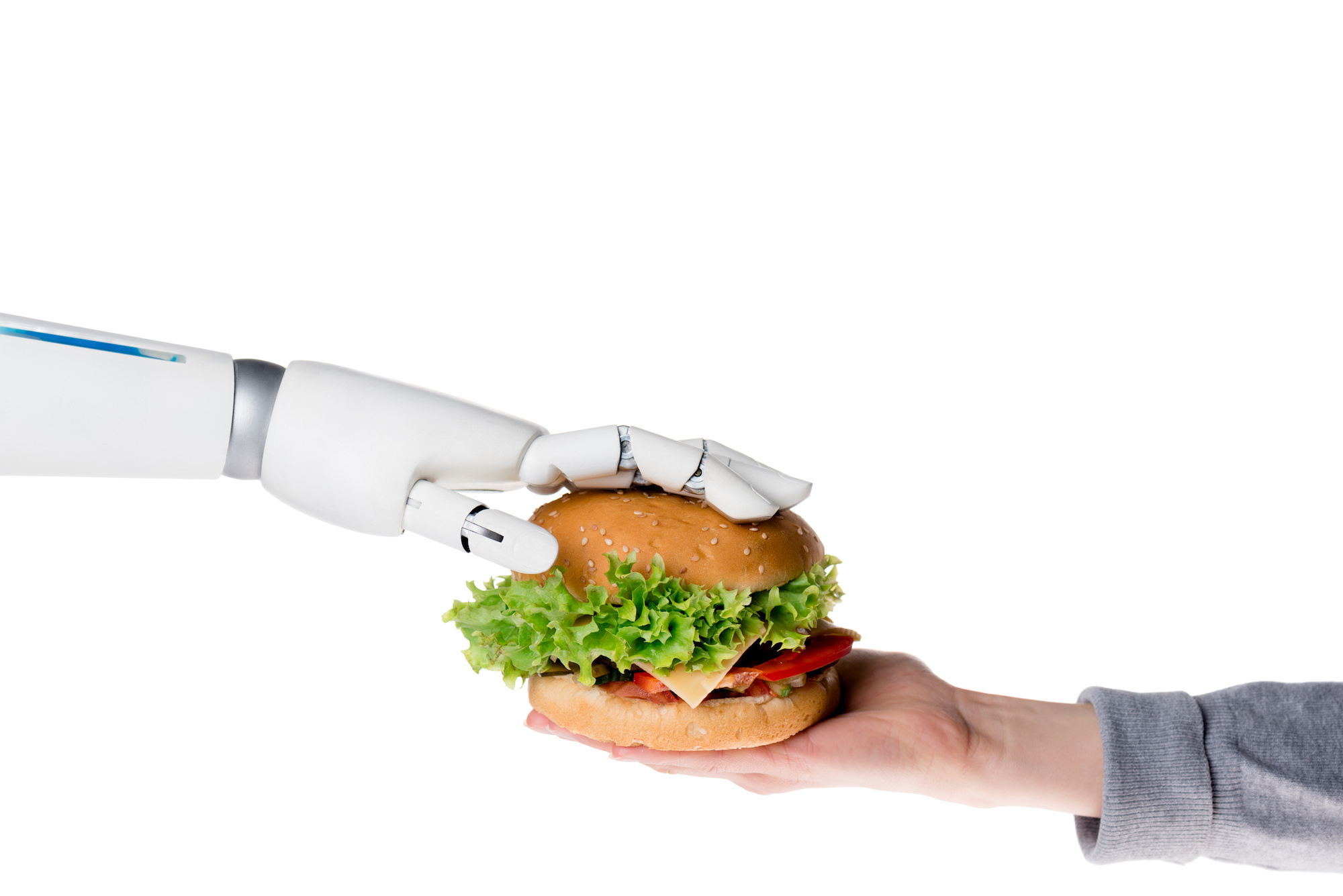
Robot waiters and baristas are a viable future alternative to manned labor. Machines already stack Big Mac ingredients in some places. Here, we can be sure that change is the only constant.
Like it or not, this could be part of what makes up the “future workforce” in the industry.
Today, we’re going to talk about the roles of machines in food and hospitality, the roles of people in the industry, and what that means for business owners – how they hire and where their capital investment goes.
Somewhere there is a golden ratio of man-to-machine. It’s not merely a matter of hiring a staff of hundreds or buying a fully automated factory. You need both the human element and the latest tools to keep your business to keep up with the competition.
According to McKinsey and Co., 73% of the manual labor taking place in food and hospitality could be automated. Factor in the global spread of COVID-19, and you have an accelerated need for such automation.
Plus, with the addition of self-driving cars, you could expect to automate everything from harvesting, to supplying, to shipping, to storing, to cooking, to assembling, to serving food products without a single person involved.
We’re leaning heavy in the direction of a workforce that needs to be ready to serve companies digitally, an unprecedented “soft” skillset, and the ability to adapt in a fast-changing world of future digital transformation and automation.
Before we get into that, here is what automation will look like down the line…
How Machines Become Part of Your Workforce
There is bound to be some friction in the transition form a manual workforce to an automated one. We have been seeing tremors of this in the gig economy, as taxi drivers have gone on strike for having been displaced by Uber.
This is a great example of what technology does to an industry. It does not completely replace the role of the human, but it changes the dynamics of the job.
In the case of Uber and Lyft, simple apps came in to enforce the working relationship between drivers and customers. Before, it was city governments or other private taxi services that facilitated these relationships. App-based services changed things like pay, hours, quality of work, and of course what exactly the work entails.
Much of the same is expected for the food and service industry. Workforces in the future are going to scale down with the emergence of machines that can do the exact same things. But that does not necessarily mean the people are going away.
If we again look at the gig economy as an analogue, we saw new jobs spring up through companies like DoorDash and TaskRabbit. DoorDash meant restaurants that once did not deliver suddenly could. TaskRabbit meant anyone could offer to perform miscellaneous chores a customer didn’t have time for.
Of course, the gig economy is not a perfect analog, as the food industry is possibly the most obviously susceptible to replacement of human hands in doing the job.
Automation will be most noticeable in places where food is assembled or where a customer can simply help themselves. McDonald’s for example, has had 14,000 of its locations updated with self-service kiosks. You simply punch in what you want, wait for your number to be called, then pick up your food.
Still McDonald’s has pledged in the past that it would not let workers loose in favor of automatons. So where do all the people go?
How People Stay on Your Workforce
Human beings won’t necessarily be replaced. But the reality is that the workforce will see some refinement in the future.
The talent itself is increasingly older and more educated. Getting a job at a restaurant used to be something you do as a teenager or to pay for college, but with rising unemployment and student loan debts through the roof, many with college degrees are forced to seek service jobs.
Because the current workforce is so overqualified, there is a much smaller labor force participation rate among 16 to 24-year-olds than in the past.
Simply put, automation increases competition between potential workers coming in. That is why both workers and hirers will need to be at their most adaptable in the years to come.
Workforces will need to be more versatile and tech savvy, and hiring managers need to be able to spot that talent.
Due to the saturation, education, and age of the workforce, employee turnover is set to increase.
Businesses will have to think about creative ways to retain workers. One of those is providing mobility towards more corporate roles in the future, providing educational resources. For example, Starbucks won employees over by paying for a portion of their college.
As a consequence of all this, training is becoming more intensive for restaurant management. This could ultimately play to the benefit of employees, and ultimately customers. Their skills and the quality of their work will improve.
In the short-term, however, dealing with a global pandemic will pose an even greater challenge than any trend to maintaining a stable workforce in this industry.
It is more important than ever, right now, for businesses to find the right people.
How to Find the Right People
Finding prospects online has become a necessity in the time of COVID. Hirers need a reliable pool of candidates to pull from.
And with digital transformation so boldly entering the frame, those candidates need to be the best, tech-literate, analytical-minded, results-driven workers on the market.
Newman’s International Associates (NIA) is a group of IT professionals from around the world that works to pair top talent with your business, right in step with digital transformation.
Your future workforce will depend on how well you are able to adapt. And it starts with how you hire.
Get in touch with the folks at NIA to learn more…