The demands of education are changing rapidly. From pre-K to Universities, technology has altered the way students and teachers alike interact in, or out, of the classroom. And with the effects of covid-19 classrooms are being overhauled, or flat out vanishing, faster than some are able to keep up with.
These demands require a new breed of teacher able to keep pace with the educational requirements being proposed in this new era of virtual classroom battlegrounds and students wielding VR goggles.
What Has Changed?
Since COVID-19 health measures were put into place, public school attendance has dropped to an all-time national low.
Because of this, schools have been forced to provide students with a virtual learning environment. In some of the more successful cases this has meant providing laptops or iPads to every student, while other circumstances required that teachers simply contact students via text to keep them up to date.
Beyond that, universities have for some time now taken huge steps to implement online learning environments. And with so many degree programs focused on technical and computer-based career fields, these programs will only increase.
Clearly, expertise in computer technology, virtual learning environments, and internet best practices like being a responsible digital citizen will be foundational to any future educator. The skills that will be required of students to succeed later in life are the skills educators need to know now.
The VR Classroom
Not only is the internet the driving force behind most classrooms currently, but it will continue to dominate and control the direction of education in the future.
With so many virtual learning environments we can only expect services like Zoom, Skype, and Google Meet to develop apps that are more learning focused.
Assignment management, color overlays, and personalized sounds and ambience are all things which could improve such programs and aid teachers with implementing instruction, providing students with clearer, more precise instruction in an environment conducive to their learning style.
Aside from virtual learning environments though, there are still a considerable amount of technological changes to be seen if and when classroom attendance returns to normal.
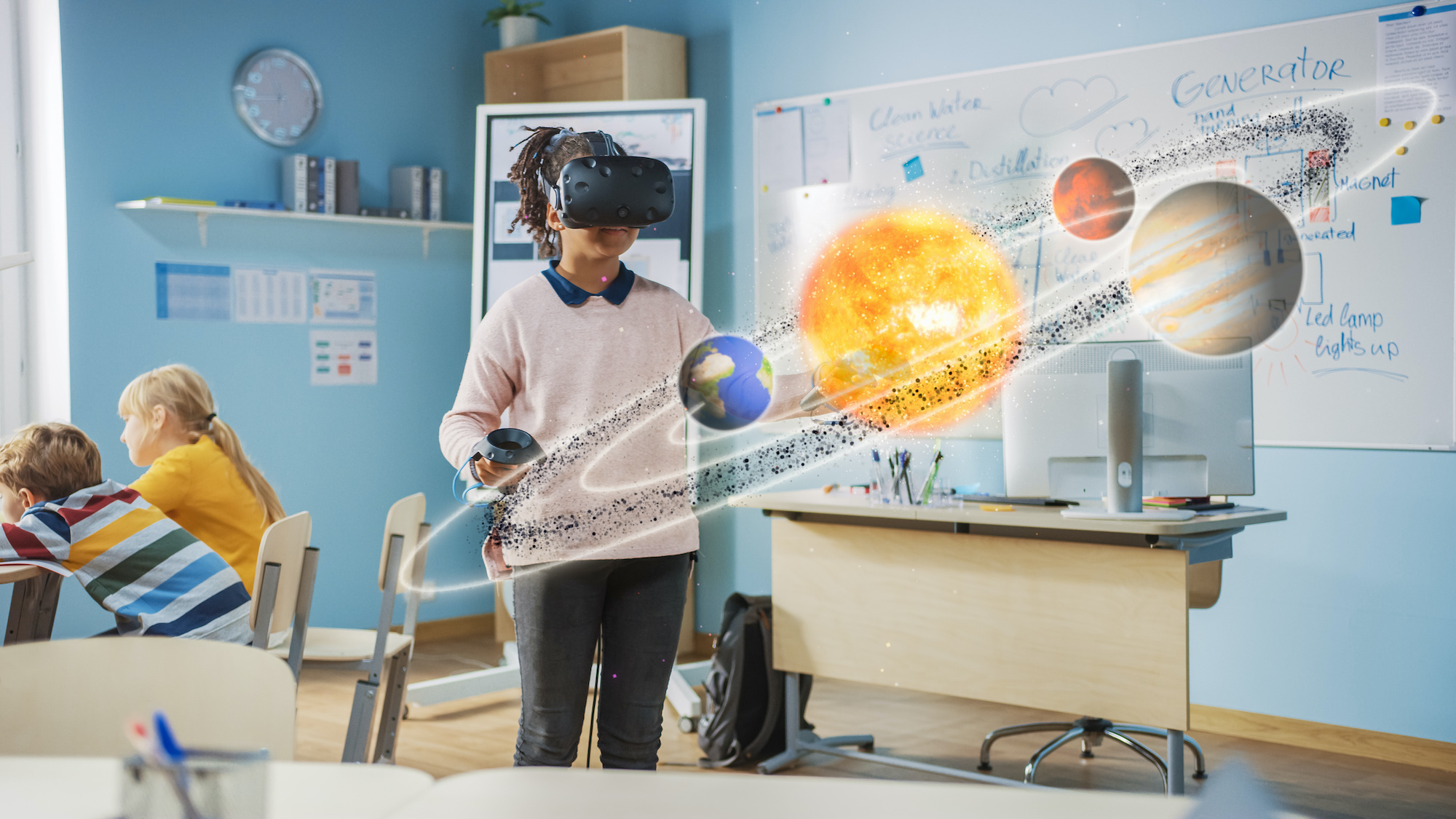
More and more frequently now educators are seeing augmented reality, or VR, being utilized in the classroom to enhance the learning experience.
Interactive white boards allow students to “drag-and-drop” items on the board using their hands, combining virtual chemical substances that would have otherwise been dangerous to mix, and allowing students to see the reactions in the form of explosive animations.
Additionally, personalised iPads keep students engaged in the classroom, and even allow for greater participation from students who might otherwise shy away from certain projects or games. Elements like these persuade students to become more interactive with their learning.
Because of this, the future of education will see more students taking a vested interest in their personal education. A shift is taking place when it comes to the roles of teachers and technology is leading the way.
Technically Teachers
One thing technology enables teachers to engage with really well is differentiation.
Differentiation is the implementation of a variety of instructional options from which students can choose how to learn about a subject.
Even the difference between reading a book online versus reading a physical book can mean a huge difference in how students engage with the material.
Already there are several apps and websites out there which help teachers discover new ways to present the same boring old topics to students in a more engaging manner- students that would otherwise be left behind were it not for these developments in presentation.
But as the teaching profession migrates from a “teacher-centric” perspective to a more “student-centric” one, providing students with options to choose from when it comes to their learning will be key to the future of education.
What’s the Subject?
In addition to physical changes in the classroom and how students and teachers interact with one another, the subjects that students will be taught are sure to evolve as technology progresses.
Coding is the leading field and backbone of the tech industry. Undoubtedly one of the most stable profitable careers of the future, it is certain that coding will become an important subject matter in any school.
Professionals understand that the earlier a student learns to code, the more successful they will become in the field.
Educators, especially in the STEM/STEAM fields, will need to have some understanding on the potential learning opportunities that coding provides and how it can be used in a variety of ways in the classroom.
3D printing is another subject that includes future growth and learning opportunities which will especially engage students that have more of an interest in the physical sciences and mechanical engineering.
Other digital tools such as CAD, video/photo editing, cloud services, and app development are sure to become staple subjects for all students.
Understanding the prevalence and direction these services provide will be the teachers primary responsibility for providing students with the skills necessary to create for themselves a future out of future tech.
Finding Future Educators
Without a doubt the face of education is changing rapidly.
With the requirements expected of teachers in new and demanding environments, you want to be sure that you’ve got the right person to bring your students into an ever expanding age of progression.
The need for quality educators stands out– and what is even more apparent is the support teams surrounding these teachers will need to possess a firm understanding of technology both in and out of the classroom.
Newman’s International Associates (NIA) is a group of IT professionals from around the world ready to pair you with the future workforce you require.
Because the classroom is not just a place anymore, let NIA help you find the people who will keep your classrooms running.