The growth of retail trade can be directly attributed to the digital transformation which has taken hold of the industry. Accessibility to products have increased because of the influence of the web, and therefore demand has increased substantially over recent years.
As profit seeking businesses struggle to gain a foothold in localized markets, it seems only natural that businesses would take their products and services to somewhere that allows them to reach a broad and diverse customer base efficiently and at reduced costs.
Especially due to COVID-19, more and more businesses are shutting their doors due to the lack of customer interaction. However, some of these businesses are finding refuge among the data driven streets of the internet, where they are able to serve and provide worldwide with just as much effort as they would in a brick-and-mortar storefront.
Because of the influx of business-driven web traffic, there is a massive industry built now around the world of online retail trade. If any market has benefited most from digital transformation, it is the store stockers, product placers, and service specialists who built themselves around their product and only needed a place to put it for the world to buy.
Mobile Markets
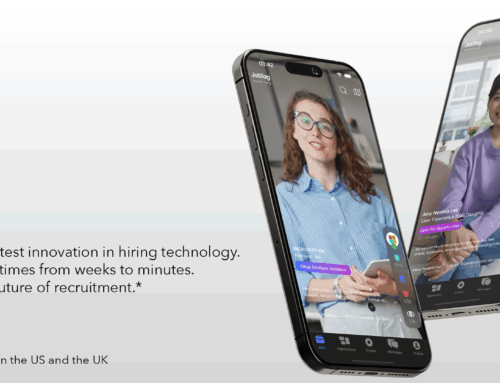
Customers can buy anything on their smartphone now. Anything. Need a new set of wheels? Smartphone. Buying a house? They can do all that on their smartphone too. They can even buy a smartphone! If the product exists, there is an app, or a mobile website, in which customers can purchase whatever it is they desire.
Mobile marketplaces have revolutionized what it means for business to do marketing and data collection. They are no longer limited to the people who walk into their store, but have near unlimited access to customers around the globe who are interested in their product and services.
The Internet brought on most of this, but phones contributed a unique combination of ease of use and data monitoring to the mix.
With the mass implementation of phone usage, companies can monitor where customers spend their time, how long they are there for, and other relevant types of data that could contribute to marketing plans.
And with nearly everyone having access to a smartphone, that is a lot of data being collected.
Analytics and Increasing Demand
Because of the broader access companies now have, and additionally the globalization of most of these markets within retail trade, there is an unprecedented increase in demand.
Not only are companies advertising to larger audiences, but the ease of purchasing, due to devices like smartphones, only ensures rapid increase in the demand of a product. Companies going through the digitization process will want to keep in mind that their product will be much more widely available and therefore should plan accordingly.
Analytics systems can help with that. Through AI-based software and machine learning, analytics can assist with helping both small and large businesses scale their growth.
Logistics Management
When demand is at an all-time high, and customers are buying left and right, there is one question that should be on everybody’s mind: how are we going to deliver this stuff?
With such an inordinate amount of data being tossed around, such as purchasing information, multiple delivery schedules, and product readiness, companies are always seeking more efficient ways to manage.
It would be no surprise to most that artificial intelligence can contribute to all these factors and more. With superior data recognition skills, and the ability to machine learn patterns and trends both outside and inside the business, AI promises to be an altering force in logistics management.
This development requires the need of network professionals able to implement, maintain, and interpret the data provided by these systems. As revolutionary as they may be, AI logistics systems do not replace the need for a human workforce.
Full-Stack Development
Another area where humans are excelling is full-stack development. As businesses continue to grow into digitized storefronts, the role of the full-stack developer and web designers will only continue to increase.
This is because the need for web development is so necessary to the process of digitization. Anything customers see or interact with online was put into place by a web developer. From purchasing buttons, to product descriptions, to data storage, it was all designed through full-stack development. This is the backbone of the digital transformation taking place in retail trade.
Physical Presence and Reduced Costs
One area of the digital transformation of retail trade in which customers and business owners might not take much notice of is the lack of physical presence from storefronts.
As businesses continue shutting their doors, many streets are being found emptier and emptier. The digital transformation is not without its ghosts, and the old storefronts which used to house businesses are a sign of the times.
Although there is a longing nostalgia and a growing concern for local businesses and owning a physical store, there should also be consideration for the reduced costs retailers experience when transitioning from physical to digital. After all, it’s much cheaper to own a website than a building.
Keeping Up With It All
Whether you’re running your business online or not, one thing is for certain: you need professionals who can make it all happen.
Newman’s International Associates understands that having the right talent means having a successful business. Finding the right talent is our business.
With so much to learn about the digital transformation process, and so much at stake, let us make sure you have the right people you need to get the job done. Because even when the world is all online, it is still people who make it all work.
Newman’s International Associates is your number one source for hiring.