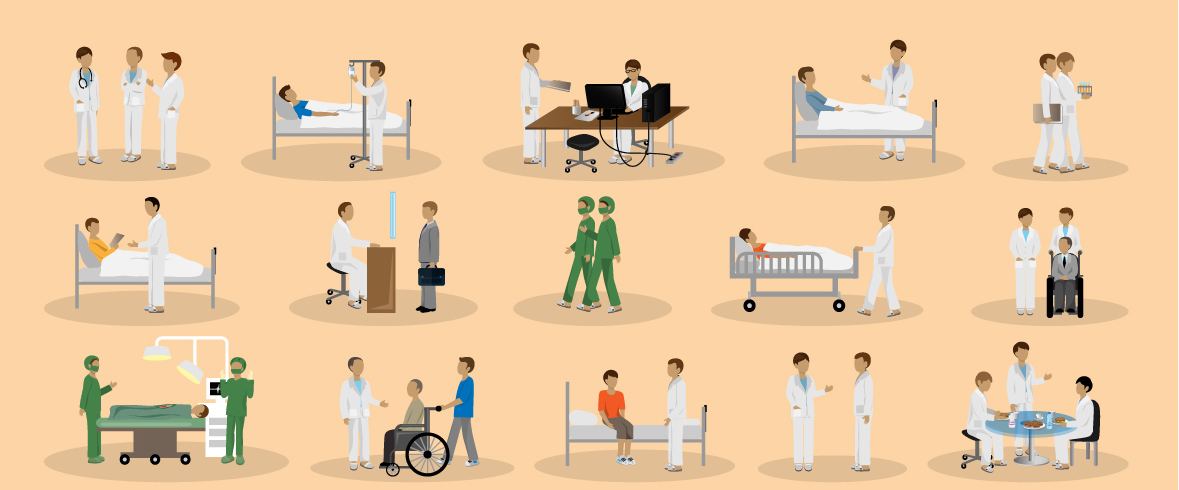
There is a growing need for healthcare and social assistance workers in our communities. But with regulations not up to par and more lucrative fields coming into light, can we fill the demand?
From healthcare providers, including elderly care, to social relief services and rehabilitation centers, social assistance plays a significant part in shaping our society.
It’s no surprise that the rolls of these positions are likely to increase in demand with so many major societal catastrophes encompassing us. There’s COVID-19, drug and alcohol addiction, and deficient care of elderly and homeless.
There is certainly a lot needed to prepare those going into these respectable and necessary fields. But are they getting the help that they need to make sure they succeed?
This is something we need to ask ourselves, because in the truest way possible their success is our success.
Stable Emergence
Expected to be one of the fastest growing fields after the pandemic, healthcare professionals will undoubtedly see an influx in their population. People from all around the globe take a more vested interest in the health and safety of those around them.
The need for a stable healthcare system is no surprise after the pandemic and the needs brought on by such conditions. Understaffed hospitals and unsupplied professionals proved to be a great challenge for some areas where the pandemic hit the worst.
Even with emerging technologies, healthcare largely remains a people centered industry, relying heavily on the very personal interactions that doctors, nurses, and supporting staff have every day with their customers.
If you’re looking for a way to support your community in a stable field, going into healthcare is surely a viable path. The question is, will you stay?
High Demand, Low Retention
One of the reasons there is such a need for talent in the healthcare industry is the low retention rate of nurses and supporting staff. This is due to a variety of factors including low wages, dangerous working conditions, and lack of proper training or education.
Because of the need, it is not uncommon for most workers in these positions to see 12-hour work shifts coupled with minimal benefits and harsh conditions. Bundle that with inexperience and poor training and you’ve got a recipe for leaving.
Indeed, many social assistance areas are experiencing similar conditions due to very similar problems. It seems the only real factor that drives people to these jobs and keeps them there is a strong motivation to work in those fields.
We could argue that by making these positions more desirable (higher pay, set schedules, education assistance) it would thereby draw in more people who would not be well suited to the work. But if that is true, so is the opposite, that by making the conditions so unacceptable there is no possible way that even well-suited people could support themselves in that line of work.
Future workers in the social assistance careers will face difficult challenges ahead if these factors are to remain. But with such an influx of interest, it is doubtful that these conditions will stay in place for very long.
Modernizing Relief Services
Other services such as elderly care, rehabilitation centers, and subsidized housing programs will experience some regulatory and technological changes as society looks ahead to their future.
Although still subject to some of the conditions mentioned before, certain aspects of these fields continually keep them in the public’s eye. Because of this, and in light of recent events, you can expect to see many changes in the days ahead.
Regulatory changes, especially for elderly care providers, will be necessary for any business to continue operating. This will mean extensive training for both new and experienced providers.
Likewise, technological advancements will require that these facilities have the understanding and know-how to implement and maintain devices like web cams for better communication with families. They will also use health monitoring systems to ensure the safety of their patients.
Additional modernization will be seen in services like rehabilitation centers as facilities find new ways to monitor and prepare for patient care. This could also include additional training in certain areas requiring hardware and software knowledge in emerging technologies.
Healthcare will also experience a lot of this modernization both in the regulatory and technological aspects. Many healthcare workers will note that, although technological advancements are slow, they are inevitable, especially at this critical point in time.
All these means that having the right background and understanding for the future workforce of these fields will be crucial to their success. Knowing what you are getting yourself into is important, but knowing where you are going is vital.
The Other Vital Component
What makes any business successful is knowing that the people you hired are the ones who will get the job done. This is especially crucial when the jobs that need doing have so many lives that depend on them.
Newman’s International Associates is dedicated to finding the right people for your business. There is no greater passion we have than guaranteeing the success of your business with the talent you require.
With so many things up in the air, be sure to let NIA help you solve the issue of finding the right talent.
The future workers of healthcare and social services will face a lot in the coming years, and that means they will need the right experience to make it through to the other side.
Newman’s International Associates specializes in making sure we bring you the most qualified candidates for your needs. Be confident and be successful with NIA.